
TABLE OF CONTENTS
- 1. TL;DR: A Quick Guide to Reading Forex Quotes
- 2. Understanding Base and Quote Currencies
- 3. What Do the Numbers in Forex Quotes Mean?
- 4. How to Read Currency Pairs Effectively
- 5. How to Analyze Historical Forex Quotes
- 6. How to Calculate Profits in Forex Trading
- 7. How to Spot Trends in Forex Quotes
- 8. How to Use Quotes for Risk Management
- 9. What Are Real-Time vs. Delayed Forex Quotes?
- 10. Tools to Help You Read Forex Quotes
- 11. Common Misconceptions About Forex Quotes
- 12. Best Practices for Reading Quotes
- 13. Frequently Asked Questions (FAQs)
- 14. Conclusion
How to Read Forex Quotes for Beginners
Learning how to read forex quotes is essential for anyone looking to trade in the foreign exchange market. Forex quotes represent the value of one currency in relation to another and are fundamental to understanding currency pairs, making trades, and analyzing market movements.
TL;DR: A Quick Guide to Reading Forex Quotes
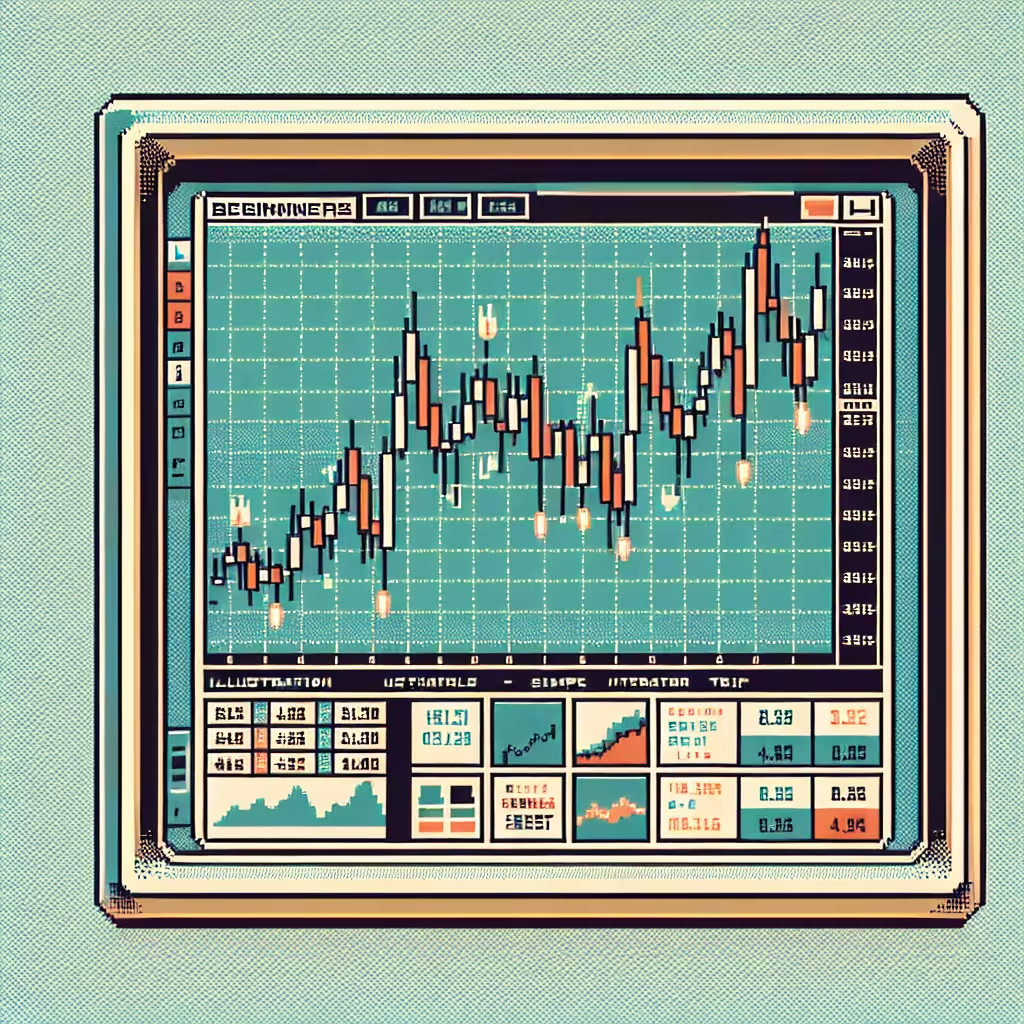
Forex quotes provide critical information about the value of one currency against another. The first currency listed is the base currency, while the second is the quote currency. For example, in the EUR/USD quote of 1.2000, 1 Euro is worth 1.20 US Dollars. Understanding quotes involves familiarizing yourself with bid and ask prices, recognizing major currency pairs, and analyzing trends. Beginners should practice reading quotes from reputable sources and utilize tools that simplify the process. By knowing how to analyze historical data and calculate profits, you can make informed trading decisions.
Understanding Base and Quote Currencies
In forex quotes, the base currency is the first currency listed in any currency pair, while the second is the quote currency. For instance, in the currency pair USD/JPY, the US Dollar (USD) is the base currency, and the Japanese Yen (JPY) is the quote currency. The value of the currency pair indicates how much of the quote currency is needed to purchase one unit of the base currency. Understanding this distinction is crucial for interpreting forex quotes effectively.
What Do the Numbers in Forex Quotes Mean?
Forex quotes typically consist of two main numbers: the bid price and the ask price. The bid price is the amount a trader is willing to pay for the base currency, while the ask price is the amount a trader must pay to buy the base currency. The difference between these two prices is known as the spread. In a EUR/USD quote of 1.2000/1.2005, 1.2000 is the bid price, and 1.2005 is the ask price. Understanding these numbers helps traders make informed decisions about entry and exit points.
How to Read Currency Pairs Effectively
Reading currency pairs involves understanding the relationship between the base and quote currencies and knowing how to interpret price movements. Beginners should familiarize themselves with major currency pairs, such as EUR/USD, GBP/USD, and USD/JPY, as these are the most liquid and widely traded. Additionally, it’s essential to recognize the significance of exchange rates, which reflect the value of one currency relative to another and can fluctuate based on economic indicators and geopolitical events.
How to Analyze Historical Forex Quotes
Analyzing historical forex quotes can provide valuable insights into market trends and potential future movements. Traders often look at historical price charts to identify patterns and trends, which can aid in making predictions. Tools like MetaTrader and TradingView offer historical data analysis features, allowing traders to spot trends, support and resistance levels, and potential reversal points. Understanding how to analyze historical quotes is vital for developing effective trading strategies.
How to Calculate Profits in Forex Trading
Calculating profits in forex trading involves understanding the price movements of currency pairs and how they translate into gains or losses. To calculate profit, subtract the entry price from the exit price of a trade and multiply the result by the number of units traded. For example, if you bought EUR/USD at 1.2000 and sold it at 1.2050, your profit would be (1.2050 – 1.2000) * number of units. This formula helps traders quantify their performance and manage risk effectively.
How to Spot Trends in Forex Quotes
Spotting trends in forex quotes is a crucial skill for traders looking to capitalize on market movements. Trends can be identified through various methods, including technical analysis, trend lines, and moving averages. A bullish trend indicates rising prices, while a bearish trend signifies falling prices. By recognizing trends early, traders can make strategic decisions on when to enter or exit trades, ultimately enhancing profitability.
How to Use Quotes for Risk Management
Effective risk management is essential in forex trading, and understanding quotes plays a significant role. Traders can use quotes to set stop-loss and take-profit orders, which help protect capital and lock in profits. By analyzing quotes and market conditions, traders can determine optimal levels for these orders, minimizing potential losses while maximizing gains. Additionally, staying informed about market news and events can help traders adjust their risk management strategies accordingly.
What Are Real-Time vs. Delayed Forex Quotes?
Forex quotes can be either real-time or delayed. Real-time quotes provide up-to-the-minute pricing information, allowing traders to make timely decisions based on the latest market conditions. In contrast, delayed quotes may lag by several seconds or minutes, which can be detrimental in a fast-paced trading environment. For serious traders, accessing real-time quotes through reliable brokers or trading platforms is crucial for executing trades effectively.
Tools to Help You Read Forex Quotes
Several tools can assist traders in reading forex quotes effectively. Trading platforms such as MetaTrader, NinjaTrader, and TradingView provide real-time quotes, advanced charting capabilities, and analytical tools. Additionally, mobile apps enable traders to monitor quotes on the go. Utilizing these tools can enhance traders’ ability to interpret market data and make informed trading decisions.
Common Misconceptions About Forex Quotes
There are several misconceptions surrounding forex quotes that can lead to confusion. One common myth is that forex trading is purely based on speculation. While speculation plays a role, many traders use fundamental and technical analysis to make informed decisions. Another misconception is that a higher quote value always indicates a stronger currency; this isn’t necessarily true, as exchange rates are influenced by various factors, including economic conditions and market sentiment.
Best Practices for Reading Quotes
To effectively read forex quotes, beginners should follow several best practices. First, always check multiple sources for quotes to ensure accuracy. Utilize reputable trading platforms and financial news websites. Second, familiarize yourself with the terminology and concepts related to forex quotes, such as bid/ask spreads and currency pairs. Finally, practice reading quotes regularly to build confidence and improve your analytical skills.
Frequently Asked Questions (FAQs)
1. What are base and quote currencies?
The base currency is the first currency listed in a forex pair, while the quote currency is the second. The value of the quote currency indicates how much of it is needed to purchase one unit of the base currency.
2. How do I calculate profits in forex trading?
To calculate profits, subtract the entry price from the exit price and multiply by the number of units traded. This will give you the total profit or loss from the trade.
3. What is the difference between bid and ask price?
The bid price is the amount a trader is willing to pay for a currency, while the ask price is the amount a trader must pay to buy it. The difference is known as the spread.
4. How can I analyze historical forex quotes?
Use trading platforms with charting tools to analyze historical quotes. Look for trends, support and resistance levels, and patterns that can inform your trading strategy.
5. What are real-time vs. delayed forex quotes?
Real-time quotes provide current pricing information, while delayed quotes lag behind. Real-time quotes are essential for quick decision-making in trading.
6. What role do brokers play in forex quotes?
Brokers provide forex quotes to traders, often aggregating data from multiple banks and liquidity providers. They facilitate trades based on these quotes and may offer additional tools and resources for analysis.
7. What are the major currency pairs I should know?
Major currency pairs include EUR/USD, GBP/USD, USD/JPY, and USD/CHF. These pairs are the most traded and have the highest liquidity in the forex market.
Conclusion
Understanding how to read forex quotes is a fundamental skill for any aspiring trader. By grasping the concepts of base and quote currencies, bid and ask prices, and how to analyze trends and historical data, you can enhance your trading strategy and make informed decisions. To further your learning, consider utilizing reliable trading tools and resources. Start your trading journey today, and unlock the potential of the forex market with Forex92’s trading robot!
Ready to take your forex trading to the next level? Visit Forex92 now to explore our powerful trading robot and start trading smarter!
Disclaimer
This article is for educational purposes only. It is not financial advice. Forex trading involves significant risk and may not be suitable for everyone. Past performance doesn’t guarantee future results. Always do your own research and speak to a licensed financial advisor before making any trading decisions. Forex92 is not responsible for any losses you may incur based on the information shared here.
